
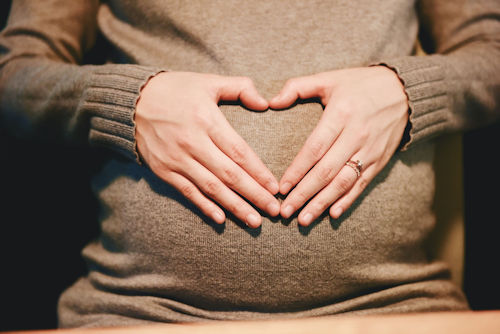
Getting Pregnant in Your 30's - How to Improve Your Odds
Getting Pregnant In Your 30's
There are many reasons women are waiting until they are older to get pregnant. College typically will take you into your early 20's if you stop after you get your undergraduate degree. After college, there's the workforce. Many women have active, successful careers, and a husband they want to spend time with before they add a child to the mix.
Before they know it, they are in their 30's and now ready for a baby. There is a plus of waiting until you are over 30 to get pregnant. Being older also typically makes us wiser. Maturity and wisdom accumulate in the extra time before trying to get pregnant when you are in your 30's.
You are more able to cope with the inevitable curveballs that being a parent always throws at you. If you're in your 30s and trying to get pregnant, there are some things you'll want to keep in mind.
Egg Quality in Your 30's
Your Eggs Are Aging.
Your chances of getting pregnant are higher if you're in the first half of your 30's. After 35, your fertility will start to decline, and your risks of miscarriage and Down's syndrome typically rises.
One of the main reasons for this is due to your egg quality as you age. When you are born, you start with about 1 million potential eggs. Most women will ovulate about 400 times in their lifetime. Leading up to ovulation, you have many follicles that go through the hormonal changes, but typically only one egg is released each month.
Each month, you can lose as many as 1,000 follicles, and as you age, that number escalates rapidly, Some of the follicles are of higher quality than others, and those are the ones that typically mature and are released when you are younger. That means your lower quality eggs are the ones that are waiting when you get older.
Even if you conceived in one to two months back in your 20s, realize it could take six months or so in your 30s – even if the doctor says there aren't any medical problems present that could impact your fertility.
Some supplements help improve the overall health of the eggs that you have left. Ovaboost includes scientifically proven ingredients that help improve egg health and optimize ovarian function. Ovaboost will help battle free radical damage to your eggs and also help energize them. Healthier eggs will be to do the dividing and implanting that they need to do after conception.
In addition to helping improve egg quality, Ovaboost can also help improve cycle regularity and hormone balance. Myo-Inositol, a main ingredient in Ovaboost, has been scientifically proven to be very beneficial to women with PCOS by promoting regular ovulation and menstrual cycles.
Toxins and Your Fertility
A Fertility Cleanse Can Boost Your Fertility.
Our day to day life exposes us to a lot of unhealthy things that can build up in our bodies. You may be surprised that the items you use every day can increase the toxins in your body. Products, like cleaning supplies, beauty products, hair care products and so on, can contain ingredients that are not very fertility friendly.
These toxins can dramatically affect your ability to get pregnant. Typically your liver will help remove excess reproductive hormones to improve your ability to ovulate regularly and ultimately get pregnant. If the toxic load is too high from daily things you come in contact with, those hormones do not get removed as well as they need to, and you end up with a hormone imbalance.
As you are aware, if your hormones are off, your chances of getting and staying pregnant decrease. Both Herb Lore's Pre-Conception fertility tea (for women) and Fertile Detox (for men and women) will help detox your system and improve your chances of getting pregnant.
Getting Pregnant in Your 30s - Things to Consider
Pregnancy in your 30s can boost your energy.
Higher energy levels are always a welcome thing. If you're in shape and lead a healthy lifestyle, you're probably going to have the amount of energy you had as a younger woman.
Your energy level during pregnancy depends more on who you are, rather than how many candles were on your last birthday cake. You'd better enjoy it while it lasts, though. After your baby is born, you may feel a level of exhaustion that you rarely experienced pre-baby.
This is the decade for new health problems.
Chronic health problems like high blood pressure or diabetes are likely first to start rearing their ugly heads in your 30s. These health problems can sometimes make getting pregnant harder and complicate pregnancy.
Be sure you work with your doctor and get a full physical before you try to get pregnant. If you are predisposed to any issues, take extra care of yourself to make sure you are as healthy as possible.
Improved health will help you get pregnant and have a healthier pregnancy. It's good for you AND your baby to be!
If you've put on weight over the years, you may be at higher risk for some problems.
Those chronic health problems tend to afflict women in the obese category more than those in a normal weight range. Try and get into a healthier weight range by improving your diet. Eating more organic foods is not only more healthy for you, but it also helps reduce some of the toxins your body has to deal with daily. The pesticides used in the growing on non-organic food can leave an unfriendly fertility residue that your liver has to deal with when you eat them.
If you can't seem to lose weight no matter how hard you try, and you have other symptoms of PCOS, you should talk to your doctor. PCOS is one of the leading causes of infertility in women. Your doctor will be able to help you figure out the next steps on your journey.
Age alone adds risk for certain pregnancy complications.
The age of 35 seems to be a cut-off for certain conditions relative to pregnancy. For example, you are more prone to gestational diabetes. Your odds of having a baby with Down syndrome or another chromosomal problem start to increase. Placenta previa – a condition where your placenta grows near your cervix and can cause bleeding – is more common after 35. If you have that condition, you're likely to require a C-section.
Nutrition and safety are more important than ever.
Once you hit 35, you're in the 'high-risk pregnancy' category, medically speaking. Now's the time to make sure you've got all of your health ducks in a row. Learn about pregnancy nutrition. Know what to eat and what to avoid. Make sure you're taking that prenatal vitamin every day.
Having a Happy, Healthy Pregnancy in Your 30s
There's no reason you can't have a happy, healthy pregnancy after 30. Most issues can be helped with supplements or the help of your doctor. Being fully informed about what the obstacles might be with your ability to get pregnant. Make sure you understand the risks associated with pregnancy in your 30s and be prepared to make choices that encourage a happy, healthy pregnancy.
Good Luck!