
Quick Answer
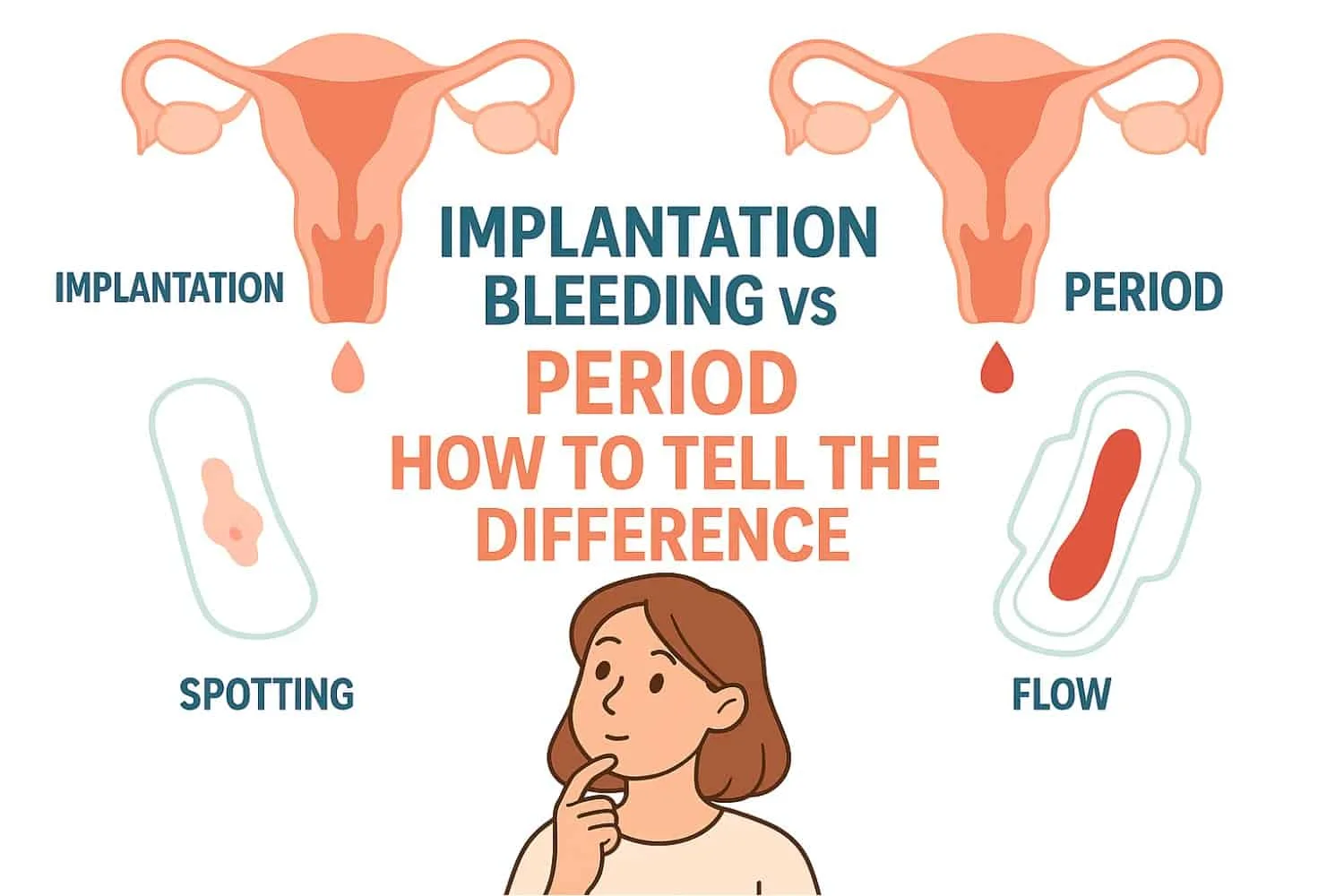
Implantation bleeding is usually light pink or brown spotting that occurs 6–12 days after ovulation. A period is heavier, lasts longer, and is typically bright red.
When you’re trying to conceive, even a tiny bit of spotting can send your mind racing. Could this be the sign I’ve been hoping for? Or is my period just coming a little early?
You’re not alone in asking. This is one of the most-Googled questions in early pregnancy. While implantation bleeding and a light period can look similar on the surface, there are some clear signs that can help you figure out what’s going on.
If you want a full breakdown of what implantation bleeding can look like – color, flow, timing, and more – this guide on what implantation bleeding looks like can help.
The 5 Key Differences Between Implantation Bleeding and a Period
Sometimes the difference is obvious. Sometimes… not so much. Here are five of the most telling ways to tell them apart:
Feature
Implantation Bleeding
Period
Color
Light pink or brown
Bright red or dark red
Flow
Very light – a few drops or smudges
Moderate to heavy, increasing over time
Duration
A few hours to 1–2 days
3–7 days, often with a pattern
Cramping
Mild or barely noticeable
Cramping may be stronger or achy
Clotting
No Clots
Possible clotting or tissue
Wondering what the color of your spotting might mean? This guide to implantation bleeding colors walks you through what’s typical and what might need a closer look.
And if you’ve noticed clots or heavier bleeding, this gentle article on clots during implantation can help you sort out whether it’s normal or something to check with your provider.
When Does Implantation Bleeding Happen?
Implantation typically happens between 6 and 12 days after ovulation (DPO). That’s usually just a few days before your expected period which is why it’s so easy to mistake one for the other.
If your spotting shows up:
- Around 6–8 DPO, it could be implantation
- At 14 DPO or later, it’s more likely your period
Late ovulation can shift your whole timeline, though. If you’re unsure about your timing, this guide on when implantation bleeding happens may help clear things up.
When to Take a Pregnancy Test (And Why Timing Matters)
It’s tempting to take a test right away, especially if you think you saw implantation bleeding. But testing too soon can lead to disappointment or confusion.
Here’s the truth:
- Your body starts producing hCG after implantation
- But it takes time to build up to detectable levels
- Wait at least 2–3 days after the spotting ends for the most accurate results
Wondering how long to wait before taking a pregnancy test after implantation? This guide breaks down the ideal testing window.
Still Not Sure? Here’s What to Watch
Even with all the facts, it’s okay to feel unsure. You can track your symptoms, watch how your body responds, and trust yourself to notice what feels different.
Some people find it helpful to:
- Track spotting patterns in a fertility app or journal
- Notice if any other symptoms are showing up (fatigue, tender breasts, etc.)
- Reach out to a provider if bleeding gets heavy, painful, or worrying
If you’re feeling restless during the wait, our Calm & Sleep Support collection offers gentle ways to unwind and soften the edges of the two-week wait.
TL;DR: Implantation Bleeding vs Period (Quick Recap)
Implantation bleeding is not the same as your period. It’s usually light pink or brown, very light in flow, and short-lived (a few hours to two days). A period is heavier, bright red, and lasts several days. If you’re unsure, wait a few days and take a pregnancy test.