
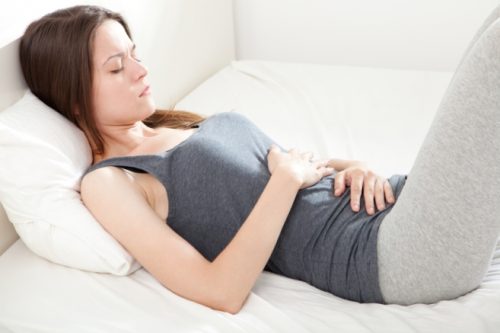
Mittelschmerz - Ovulation Pain and Cramping - OH! The Pain!

Most women are fully aware that their period can come with pain and cramping, but what about the cramping (mittelschmerz) that occurs during the middle of your cycle, around the time of ovulation?
About 1 in 5 women will experience ovulation related cramping, mittelschmerz, about two weeks before their period is due to start. For most women, this condition is associated with a sharp pain that diminishes into a dull ache.
Mittelschmerz - What It Means
The word, mittelschmerz, is German in origin and literally means:
| Mittle = Middle or Medium |
| Schmerz = Pain |
It is a very accurate description of what is going on for some women - pain in the middle of your menstrual cycle.
What is Mittelschmerz and What Causes It
Mittelschmerz is pain or cramping, either dull or sharp that you feel around the time you ovulate. The exact cause of ovulation-related cramping and pain isn't fully known.
One theory is the growth follicle may cause the stretching of the ovary causes the pain. Alternatively, it's assumed that you feel the pain when ovulation occurs and your egg breaks out of the follicle. Minor leakage of blood from the ovary during ovulation might cause mittelschmerz to occur. The assumption is when it does leak, it irritates the abdominal wall or nearby nerves and causes painful ovulation. Depending upon your unique pain threshold and the amount of blood that does leak, mittelschmerz might affect you differently than others.
The University of Melbourne conducted a study that presented another possible cause of ovulation pain. The research suggests that the majority of women feel the pain before they ovulate. The pain seems to be associated with the luteinizing hormone (LH) peaking and causing the ovarian muscle to contract.
Recognizing Mittelschmerz (Ovulation Related Cramping)
- Timing - If you are going to feel mittelschmerz, it will typically happen about 14 days before your period is due to arrive. This pain may last for a couple of hours or as long as a couple of days.
- Location - Ovulation cramping is usually felt on one side of your body, near the hip bone. If you have ovulation pain every month, the side may vary depending on which ovary is releasing the egg that month.
- What it Feels Like: The way women feel the pain varies. It could feel like uncomfortable pressure, twinges, sharp pains, or cramps. If you are feeling cramps, they will feel different from menstrual cramps as the location the cramping is different. When you have period cramps, your whole uterus is a player in the pain, but where mittelschmerz is concerned, the cramping will be located off to one side, where the ovary is located.
Mittelschmerz as an Ovulation Sign
If you are actively trying to get pregnant, you know that the best time to get pregnant is around when you ovulate. Besides the usual signs of fertility, like egg white cervical mucus, mittelschmerz is a significant ovulation indicator. If the pain isn't too bad, you might want to let your significant other know what is going on. Now would be the best time to have sex if you are trying to get pregnant.What Can I Do to Relieve Ovulation Pain?
No specific treatment is usually required for ovulation pain, as this only occurs for a short time. If it isn’t over quickly, and the pain lingers, there are ways to make this time of your monthly cycle much more comfortable. Take plenty of time to rest until the pain is gone, taking warm (not hot) baths to feel relaxed, and drink plenty of fluids to keep you properly hydrated. You can try anything that you usually use when you have period cramps.
For women with severe ovulation pain, over-the-counter pain relievers, like ibuprofen or aspirin, and a heating pad applied over the abdomen will usually provide relief from the pain. You can also try pain relievers made for menstrual pain such as Midol.
However, if the pain becomes severe and intolerable, and pregnancy is not something you want to achieve soon, a doctor can prescribe oral contraceptives that will stop ovulation and the resulting monthly mid-cycle pain.
When Should I Be Concerned?
For most women, ovulation pain and cramping is not a sign of a severe problem. Several things can cause ovulation pain. It could be caused by the ovary cramping or a ruptured or emerging follicle. If the cause of the pain was the follicle rupturing, you might end up seeing a bit of ovulation bleeding.When to Contact Your Doctor
- If you are super concerned about the pain, seriously, doctors are there to support you. If you are concerned, get checked out.
- Pain is lasting longer than 24 - 48 hours.
- You are in so much pain that it is impossible to cope.
- If spotting is too heavy to qualify as spotting.
- Having sex causes too much pain to bear.
Endometriosis, ovarian cysts, or even appendicitis, can also cause ovulation pain. If you have pain every month during ovulation, you should talk to your doctor. It may be indicative of another medical problem, which can often be treated. Your doctor can do an exam, use blood tests, ultrasounds, and more to help diagnose what exactly is going on.
Talking to your doctor will help get to the root cause of the cramping around the time you ovulate. If there is a fertility-related condition going on, your doctor will have the necessary tools to address it.
Leave a comment: