

All About Cervical Mucus and Getting Pregnant
What is Cervical Mucus?
How Cervical Mucus Changes During Your Cycle
What Causes "Egg White" Cervical Mucus?
Charting Your Cervical Mucus Changes to Determine Your Fertility
Am I Infertile If I Have No Cervical Mucus?
Causes of Low / No Cervical Mucus
What is Hostile Cervical Mucus?
Clomid, Hostile Cervical Mucus and Robitussin/Guaifenesin
Cervical Mucus and Your Partner's Sperm
How to Improve the Quantity and Quality of Your Cervical Mucus
Cervical Mucus Supporting Supplements
What is Cervical Mucus?
Cervical mucus is a jelly-like substance produced by minute glands in the cervical canal. The mucus appears as a discharge throughout your cycle. You will notice it after you wipe when you go to the bathroom. As you get closer to ovulation, you even may see it on your underwear. As your hormones change during the month, the color and consistency of the mucus will change as well. At the beginning of your cycle, your cervical mucus will be dry and scant. If ovulation is close, you should have a lot of cervical mucus with the consistency of raw egg whites.Back to Top
How Cervical Mucus Changes During Your Cycle
1. Before Ovulation (lower chance of getting pregnant)
In the first days following your period, you will notice very little discharge and the vulva area can be dry. During this phase, the possibility of pregnancy is low.
2. Approaching Ovulation (increased chance of getting pregnant)
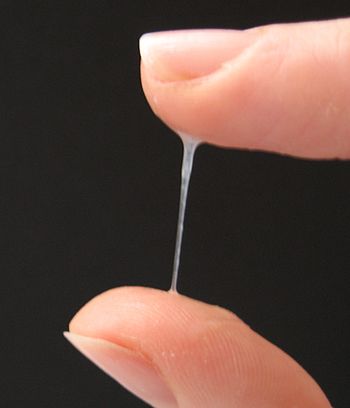
At this stage, the discharge is moist or sticky and white/cream colored. When performing the finger stretch test, the mucus will break apart after a little distance (less than 1 cm). As this phase progresses, you will notice an increase in volume. The color becomes more opaque, and you can stretch your fingers farther apart before it breaks.
3. During Ovulation (highest chance of getting pregnant)
Right before ovulation, you should see cervical mucus that resembles egg whites. It will be at its thinnest, most transparent, and plentiful during this time. The mucus will stretch several centimeters before breaking apart if it does so at all. The volume continues increasing until it reaches a point called the ‘mucus peak.’ Ovulation occurs around the peak, and the chances of getting pregnant are the highest. Due to the mucus quality, the sperm can survive up to 72 hours, which increases the chances of fertilization.
4. After Ovulation (decreasing probability of getting pregnant)
During this phase, the cervical mucus returns to its previous, tacky consistency. The mucus volume decreases, and the dryness returns to the vulvar area.

What Causes "Egg White" Cervical Mucus?
A woman's cycle is run by a delicate dance of hormones that ebb and flow over about a month. As your body gets approaches ovulation, there is a surge of estrogen, created by the maturing follicle in your ovary that will eventually rupture and release your egg. It's this surge of estrogen that prompts your cervix to secrete the slippery clear cervical mucus to produce a more sperm friendly environment.
Back to Top
Charting Your Cervical Mucus to Determine Your Fertility
Tracking your mucus through your cycle can give you an idea of then you are getting close to ovulation.
How to Collect Cervical Mucus Samples
There are several ways to collect cervical mucus samples. Always wash your hands before attempting any of them so you can prevent unwanted spread of bacteria or other harmful germs.
Listed below are the most common ways to get a sample of the cervical mucus:
1. Insert a finger into the vagina and sweeping around the entrance to gather an adequate amount of secretions.
2. Wipe the vaginal entrance with toilet/tissue paper and analyze the discharge collected.
3. Insert a finger or cotton swab into the vagina and sweep the cervix (or as near as you can get) to get a mucus sample.
Egg white cervical mucus is a sure sign of fertility. When you see it, your chances of conception are the highest.
After you collect the cervical mucus, place it between the thumb and index finger, and stretch it apart. If you can stretch it a considerable distance without it breaking, ovulation is likely near. When you have sex at this stage, your chances of getting pregnant are the greatest.
Considerations When Cervical Mucus Charting
If you have had sex recently, you should not be trying to check our cervical mucus for fertility signs. The cervical fluid plus the semen wouldn't allow for an accurate interpretation.The issues below can cause you to have drier cervical mucus.
- Vaginal infections
- Medication-induced lack of cervical mucus
- Birth control
- Advanced reproductive age (over 35)
- Irregular menstrual cycle
- Hormone imbalances
- Recent surgical procedures on or near the cervix
If you do not see fertile quality cervical mucus, you should choose a different ovulation prediction method. Alternatives include charting basal body temperature or using ovulation tests.
Cervical Mucus Chart
Back to Top
Am I Infertile If I Have No Cervical Mucus?
You have been dreaming of having a baby and have been doing your research. You think you have no cervical mucus, and of course that mesh with your goal of getting pregnant. Will you be able to get pregnant due to this problem? Getting pregnant is more difficult if you don't have fertile quality cervical mucus, but it doesn't mean you are infertile. Though, the Advanced Fertility Center of Chicago does say that inadequate cervical mucus is a potential cause of "unexplained infertility.Back to Top
Causes of Low / No Cervical Mucus
Anovulation With No Cervical Mucus
Anovulation is when your body does not ovulate as it should every month. Without ovulation, pregnancy is not possible. One of the leading causes of anovulation is polycystic ovarian syndrome (PCOS). Other causes include extreme stress, being very over or underweight, and intense exercise. If you think you are not ovulating, then you should discuss the issue with your doctor. Other medical conditions can lead to anovulation too.Weight Issues and Limited Fertile Cervical Mucus
A woman's weight can play a role in how much cervical mucus her body produces. Women with 18% body fat or less may not have enough estrogen in their body to stimulate ovulation. If you are overweight, you could have an excess of estrogen. Excess estrogen can prohibit ovulation by interrupting the hormonal feedback system. This feedback system orders the egg follicles to mature.Low Estrogen Levels
Low estrogen levels are often suspected when there is little or no cervical mucus. But don't rush out and buy estrogen supplements – these can upset the healthy hormonal feedback system and make cervical mucus dryness even worse. Tofu, tempeh, TVP, and soy milk are all excellent soy products to try. Some supplements help balance your estrogen levels. Both Maca and Vitex work with your endocrine system. They help balance your hormones - whether you have too much or too little estrogen in your body.Age and Fertile Cervical Mucus
An absence of cervical fluid can also be due to a woman’s age. Your hormone balance shifts as you get older. If you are in your 40's, you may end up seeing fewer days where you have the fertile cervical mucus. You may ovulate irregularly even though you have what appears to be regular periods.Medications that Affect Cervical Mucus Production
Some prescription medications can affect your cervical mucus, as well. The fertility medicine Clomid (clomiphene citrate) can make your cervical mucus hostile. It can make your mucus thick and sticky, which prevents the sperm from making its journey to fertilize your egg.
Antihistamines can also dry up your cervical fluid. Think about it. When your seasonal allergies are in full force, your nose tends to run non stop. When you take allergy medicine (antihistamine), it dries your nose and runny eyes up. Well, it does the same thing to other mucousy areas too.
Hormones, contained in birth control pills or hormone therapy, can change cervical mucus too. If you are concerned, talk to your doctor. They can help you find medications that play nice with your cervical mucus. They may also have some suggestions on improving your cervical mucus so you can get pregnant.
Back to Top
What is Hostile Cervical Mucus?
Hostile cervical mucus is cervical mucus that is too thick and sticky. You may also not have much of it at all. This consistency prevents sperm from moving freely. If the sperm can't move through the vagina and the cervix, the chance of getting pregnant is pretty slim. For women with healthy hormone balance, the cervical mucus will change at ovulation. The fertile quality cervical mucus presents as a thin, stretchy, slippery discharge. Fertile cervical mucus helps protect and nourish sperm and facilitates the movement of the sperm through the cervix. Hostile cervical mucus does the opposite.Back to Top
Clomid, Hostile Cervical Mucus and Robitussin/Guaifenesin
Women, who take Clomid to induce ovulation, can experience hostile mucus, and that's a bit ironic. Clomid helps solve your ovulation problem and then can create a situation that can also prevent you from getting pregnant. If you have to take Clomid, you might want to consider asking your doctor about lowering your dosage.If that is not an option, guaifenesin may be helpful. You can buy guaifenesin from your drugstore and available with generic branding. You will also find it as an ingredient in some Robitussin cough medicines and Mucinex. If you opt for cough medicine, make sure the other ingredients do not dry up mucus. Supplements with l-arginine can be helpful as can using a lubricant like Pre-seed.
Back to Top
Cervical Mucus and Your Partner's Sperm
Your fertile cervical mucus helps to nourish and protect the sperm as it travels to fertilize your egg. The egg white cervical mucus helps to do several different things, including:
- Protecting the sperm. The vaginal environment is a harsh one for those struggling sperm to swim around it. It's very acidic, which in turn can cause sperm to stop moving altogether. Egg white cervical mucus helps to protect the sperm in the vagina.
- Helping the sperm travel. In addition to shielding the sperm from the acids in the vagina, it also helps to create a path for the sperm to swim forward. It helps the sperm move to the fallopian tubes. Once there, it can (hopefully) find an egg to fertilize.
- Holding back abnormal sperm. Some sperm isn't as healthy as others. Sperm may be abnormal if they have chromosomal defects. If these sperm were able to make it through the reproductive canal and fertilize an egg, chances are pretty good that the egg would not implant, or that there would be some other problem. Egg white cervical mucus slows down abnormal sperm. It also helps the normal and healthy sperm win the race to fertilize the egg.
Back to Top
How to Improve the Quantity and Quality of Your Cervical Mucus
Ideally, your cervical mucus will change based on how your hormones shift throughout your cycle. Lack of fertile cervical mucus makes it harder for you to get pregnant. The sperm can not swim as well and are not supported and protected on their journey. There are several things you can try to help improve the quality of your cervical mucus.
- Stay Hydrated - If you are dehydrated, your cervical mucus production can suffer. Drinking at least eight glasses of water a day can help your body work as it should.
- Try Pre-Conception Tea - The herbs in Herb Lore's Pre-Conception tea help balance your hormones and help improve your cervical mucus production. Dandelion leaf, alfalfa, and red clover blossom help your body produce more cervical mucus. With better cervical mucus, the sperm can then travel safely in your body so you can get pregnant faster. Drinking caffeine free fertility tea also helps you stay hydrated!
- Eat Your Veggies - Sperm prefers a more alkaline environment. You can improve the ph of your cervical mucus by adding different alkaline foods to your diet. Consider adding more of the following to your diet: radishes, beets, carrots, broccoli, cabbage, cauliflower, brussels sprouts, garlic, kale, & spinach.
- Review Your Medications - Clomid and allergy medications can known interfere with the quality of your cervical mucus. These medications your cervical mucus thicker and make it more difficult for sperm to safely navigate your reproductive system.
If you find yourself reaching for a lubricant when you have sex, be sure you use one that is sperm friendly. Pre-Seed is the original lubricant that helps keep sperm healthy and moving. It is the same consistency as fertile cervical mucus. Other lubricants are thick and inhibit sperm movement. They also contain ingredients that are harmful to sperm. They are no better than your hostile cervical mucus.
Back to Top
Cervical Mucus Supporting Supplements
Several supplements can help improve your cervical mucus. FertileCM and Arginine Gel both contain L-Arginine. L-Arginine supports the production of nitric oxide and helps improve blood flow to the uterus, ovaries, and genitals. Studies have shown that supplementing with l-arginine can help promote fertile cervical mucus. Additionally, increased nitric oxide production helps improve your uterine lining and boost your sex drive. That's a nice added bonus!
Evening Primrose Oil (EPO) is often used to help increase cervical mucus. It is an essential fatty acid that is also an anti-inflammatory. EPO not only increases the quantity of your cervical mucus but also improves the quality. Take EPO from the first day of your cycle until ovulation, and you should only take 1,000 IU per day. You do not want to take evening primrose oil after you have ovulated just in case you are pregnant. That’s because it might cause the cervix to soften. Not something you want happening until you have reached a full term pregnancy. It also can encourage contractions, and this could make implantation difficult.
Guaifenesin helps prevent the production of hostile cervical mucus. Also, it helps to promote the creation of egg-white cervical mucus. You can get guaifenesin at your local drug store.
Licorice root is another excellent herb that has progesterone and estrogen-like effects. The mucus has better fluidity with licorice root, and it also helps clean the colon.
Back to Top
Resources:
Mahran A, Abdelmeged A, Shawki H, Moheyelden A, Ahmed AM. Nitric oxide donors improve the ovulation and pregnancy rates in anovulatory women with polycystic ovary syndrome treated with clomiphene citrate: A RCT. International Journal of Reproductive Biomedicine. 2016;14(1):9-14.
Mörlin B, Hammarström M. Nitric oxide increases endocervical secretion at the ovulatory phase in the female. Acta Obstet Gynecol Scand. 2005 Sep;84(9):883-6. PubMed PMID: 16097981.
Hamilton-Fairley D, Taylor A. Anovulation. BMJ : British Medical Journal. 2003;327(7414):546-549.
Katsikis I, Kita M, Karkanaki A, Prapas N, Panidis D. Anovulation and ovulation induction. Hippokratia. 2006;10(3):120-127.
Shamim N, Usala SJ, Biggs WC, McKenna GB. The elasticity of cervical-vaginal secretions is abnormal in polycystic ovary syndrome: Case report of five PCOS women. Indian Journal of Endocrinology and Metabolism. 2012;16(6):1019-1021. doi:10.4103/2230-8210.103030.
Melo AS, Ferriani RA, Navarro PA. Treatment of infertility in women with polycystic ovary syndrome: approach to clinical practice. Clinics. 2015;70(11):765-769. doi:10.6061/clinics/2015(11)09.
Check JH, Adelson HG, Wu CH. Improvement of cervical factor with guaifenesin. Fertil Steril. 1982 May;37(5):707-8. PubMed PMID: 6896190.
Luck MR, Jeyaseelan I, Scholes RA. Ascorbic acid and fertility. Biol Reprod. 1995 Feb;52(2):262-6. Review. PubMed PMID: 7711198.
Effects of vitamin “C” on the endometrial thickness and ovarian hormones of progesterone and estrogen in married and unmarried women KAAJ Sami R. Al-Katib, Meissam MH. Al-Kaabi American Journal of Research Communication 8 (1), 24-31
Leave a comment: