
Basal Thermometers - Tips for Use
Couples trying to conceive will probably be making use of a basal thermometer to help them determine when the best time for conception is. There are ways to make the most of this little device so that readings are as accurate as possible.
What is a Basal thermometer?
When trying to conceive, the very best you can do to help yourself is to chart your cycle using a basal thermometer. This very sensitive thermometer can identify even the tiniest of temperature changes.
As it can pick up temperature changes which normal thermometers are unable to do, a basal thermometer is a popular tool with couples who are trying to track ovulation.
A woman’s basal body temperature rises slightly just after ovulation. Three days of a continued rise in basal body temperatures will confirm that ovulation did indeed take place.
Types of Basal Thermometers
Two types of basal thermometers available are mercury, or glass, basal thermometers, and digital basal thermometers. Each type of thermometer has its pros and cons.
While mercury basal thermometers are more difficult to use – they have to be shaken down straight after use and can be complicated to use first thing in the morning, some doctors feel that they are more accurate.
There are different types of digital basal thermometers in a wide range of prices. The advantage here is that a digital thermometer will be able to give you your temperature quicker than a glass thermometer will – usually within 30 to 60 seconds.
Also, some of the fancier ones will even record your temperature for you. While some even come with a built-in backlight display making it easier to read in the morning.
Choose a basal thermometer that is accurate to .1 degrees Fahrenheit. Most glass thermometers are only accurate to .2 degrees Fahrenheit. This is important so that you can better know when you are ovulating.
Tips for Using Basal Thermometers
Since using one can be intimidating, here are a few of the best tips to use a basal thermometer:
-
Wake up
Experts at the American Pregnancy Association recommend that you take your temperature immediately upon waking up; this way your body has not had the opportunity to heat up through moving and talking.
Keep your thermometer within easy reach of your bed so that you do not have to move your body too far to retrieve it. If you are going to be using a glass thermometer, remember to shake it down at night before you go to bed.
- Timing is everything Try to take your temperature at the same time every morning, at least within a 30 – 60 minute period. Set your alarm if you need to. Keep in mind that even the slightest fluctuation in temperature can wreak havoc on your chart. Your temperature can change by up to .2 degrees per hour. Therefore, it can be higher if you take your temperature later than normal and could be lower if you take it earlier than normal.
- By the hour Do take your temperature after having at least three to five hours of sleep. Sleep deprivation can lead to an increase in body temperature.
- Choose a method and placement Your basal body temperature can be taken orally, vaginally, or rectally. Once you have chosen your method, it best to stick with it throughout your cycle. Try to place the basal thermometer in the same location inside your mouth, and at the same depth vaginally or rectally.
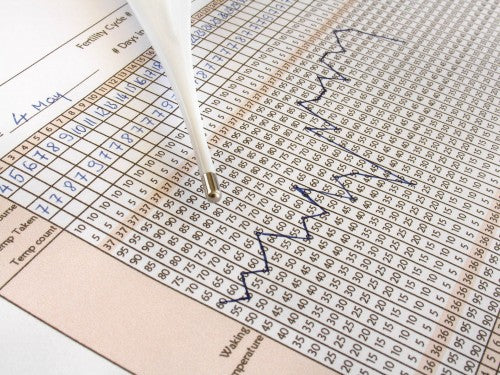
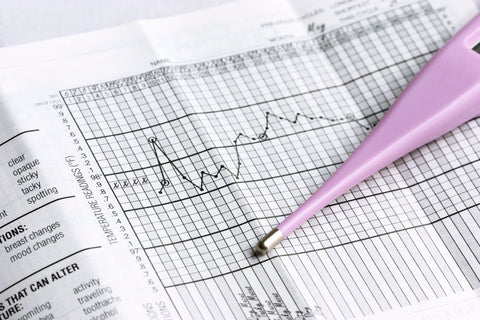
- Record it Keep a notepad and pen next to your bed, or better yet – use a graph chart or a basal body temperature chart. Record your temperature every morning and plot it along the graph. Your body temperature should rise between 0.4 and 1-degree Fahrenheit after ovulation, which should make your chart biphasic. So your chart should illustrate low temperatures during your follicular phase before ovulation, then higher temperatures after ovulation during your luteal phase.
- Have sex Although some women will experience a temperature drop right before they ovulate, every woman will experience a rise in their temperature after they have ovulated. If you do see a temperature drop, you should plan on having sex as soon as possible, just in case you are indeed ovulating.
Leave a comment: